
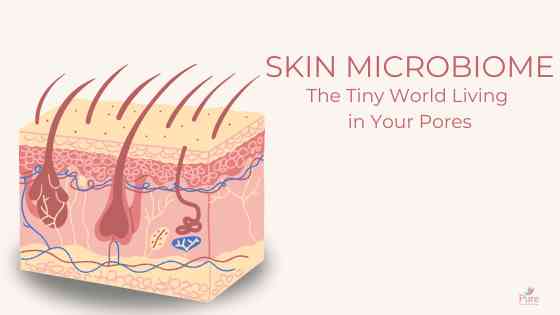
Right now, your skin microbiome is quietly at work, supporting and protecting you in ways you cannot see. Beneath the surface, millions of microorganisms—bacteria, fungi, and other microscopic life—exist in a delicate balance, forming an ecosystem that is essential to the health and resilience of your skin.
For decades, we were taught to approach skincare with the mindset of elimination. Cleansing meant stripping, toning meant tightening, and anything living on the skin was considered something to remove. The idea of “perfect” skin became closely associated with sterility, as if the absence of life was the ultimate goal.
However, our understanding has shifted. Research now shows that the skin microbiome is not something to fight, but something to support. These microorganisms are not intruders; they are active participants in maintaining your skin’s balance, helping to defend against harmful bacteria, regulate inflammation, and strengthen the skin barrier.
Your Skin as a Living Ecosystem
What we often perceive as a simple surface is, in reality, a dynamic and intelligent environment. Every square centimeter of your skin hosts a diverse community of microbes that interact not only with each other, but also with your immune system, your oil production, and even your skin’s hydration levels.
In a balanced state, this ecosystem functions almost like a protective veil. Certain bacteria, such as Staphylococcus epidermidis, help prevent harmful organisms from taking hold by competing for space and resources, while also producing substances that naturally inhibit the growth of pathogens. Others, including Cutibacterium acnes, play a role in maintaining the skin’s slightly acidic pH by breaking down sebum into beneficial fatty acids.
Even the presence of microscopic mites, often misunderstood, is part of this natural environment. For most people, they exist without causing harm, contributing quietly to the ongoing renewal process of the skin.
When viewed through this lens, the skin is no longer something to control, but something to understand and support.
When the Skin Microbiome Falls Out of Balance
Skin concerns rarely come from the presence of bacteria alone, but rather from imbalance within this ecosystem. The term used to describe this state is dysbiosis, where diversity is reduced and certain strains begin to dominate.
This imbalance can manifest in many ways. In acne-prone skin, it is not simply the existence of Cutibacterium acnes that creates breakouts, but the overrepresentation of specific inflammatory strains combined with a loss of microbial diversity. Similarly, in conditions such as rosacea, an increase in certain microorganisms can trigger an exaggerated immune response, leading to persistent redness and sensitivity.
What is often overlooked is how easily this balance can be disrupted. Over-exfoliation, harsh cleansers, and overly aggressive treatments can strip the skin of its natural defenses, removing not only harmful bacteria but also the beneficial ones that keep everything in check. In trying to create clarity, we sometimes create vulnerability.
The Deeper Connection: Gut, Stress, and Skin
The state of your skin microbiome is also influenced by what happens internally. The connection between the gut and the skin is now widely recognized, with imbalances in the gut microbiome often reflecting as inflammation on the skin.
A diet high in processed foods or chronic digestive imbalance can contribute to systemic inflammation, which may show up as breakouts, sensitivity, or dullness. At the same time, stress plays a profound role. When the body remains in a prolonged state of tension, it alters immune responses and increases inflammatory signals, making the skin more reactive and less resilient.
This is why true skin health cannot be approached from the surface alone. The skin responds to the internal environment just as much as it does to what is applied externally.
A New Approach to Skincare: Supporting Rather Than Stripping
As our understanding of the skin microbiome evolves, so does the philosophy of skincare. The focus is gradually shifting away from aggressive correction and toward gentle support.
Ingredients such as prebiotics and postbiotics are becoming central to this approach. Prebiotics act as nourishment for beneficial bacteria already present on the skin, helping them thrive and maintain balance. Postbiotics, on the other hand, are the beneficial compounds produced by these microorganisms—such as peptides and fatty acids—which can help calm inflammation and reinforce the skin barrier.
Rather than overwhelming the skin with multiple active ingredients, this approach encourages a more refined and intentional routine—one that respects the skin’s natural intelligence.
A More Gentle Way Forward
When the skin feels reactive, it is often a sign that it needs less interference, not more. Simplifying your routine, choosing pH-balanced formulations, and avoiding unnecessary stripping can create the conditions for your skin microbiome to rebalance naturally.
Equally important is the way you support your body as a whole. Nourishing foods, moments of rest, and practices that help regulate stress all contribute to a healthier internal environment, which is reflected in the skin.
An Invitation to Work With Your Skin
In my holistic facials, the focus is never on forcing the skin into change, but on guiding it back into balance. Each treatment is designed to support the skin microbiome through gentle, intentional techniques that respect both the physical and emotional state of the person receiving it.
By working with the skin rather than against it, we create results that feel not only visible, but sustainable.
If you are in Amsterdam or Amstelveen, you are warmly invited to experience this approach—where your skin is treated as part of a whole, not just as a surface. ( BOOK YOUR TREATMENT)
Closing Reflection
Your skin microbiome is not a flaw to correct or something to eliminate. It is a living, intelligent system that plays a vital role in your overall skin health.
Perhaps the shift is not in finding better products or stronger solutions, but in changing the question itself. Instead of asking how to fix the skin, we begin to ask how to support it.
And in that shift, the skin often responds in the most natural way—by returning to balance, calm, and quiet radiance.